
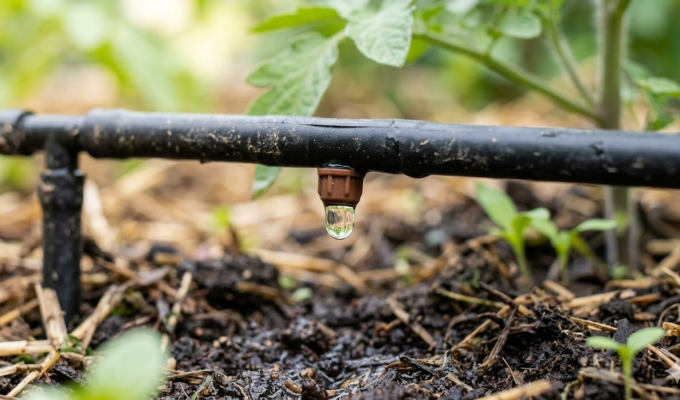
In an era of increasing water scarcity and a growing global population, the agricultural sector is under immense pressure to produce more with less. Drip irrigation, a method that delivers water directly to the root zone of plants, has emerged as a powerful solution, transforming how farmers manage water, improve crop yields, and enhance the sustainability of their operations. By moving away from traditional, often wasteful methods like flood irrigation, drip systems offer a precise, efficient, and economically sound alternative for farms of all sizes.
At its core, drip irrigation is the slow, controlled application of water through a network of pipes, tubes, and emitters. Unlike sprinklers that spray water over a large area or flood irrigation that covers an entire field, drip systems deliver water and nutrients directly to the base of each plant. This targeted approach is the key to its remarkable efficiency. According to research from Oregon State University, a well-designed drip system loses practically no water to runoff, deep percolation, or evaporation [1]. This stands in stark contrast to conventional methods, where water loss is a significant issue.
The Triple Bottom Line: Water, Yields, and Cost Savings
The benefits of drip irrigation are clear and measurable, impacting water conservation, crop productivity, and farm profitability.
1. Unparalleled Water Efficiency
Globally, agriculture accounts for over 70% of all freshwater withdrawals, making water conservation a critical priority [2]. Drip irrigation is one of the most effective tools for addressing this challenge. Studies have shown that drip systems can reduce water consumption by 20% to 60% compared to traditional irrigation methods [2]. This efficiency not only preserves a vital natural resource but also allows farmers to cultivate more land with the same amount of water, a crucial advantage in arid regions or areas with declining groundwater levels.
2. Increased Crop Yields and Quality
By delivering a consistent and optimal supply of water and nutrients directly to the root zone, drip irrigation creates ideal growing conditions. This precision eliminates the stress cycles of overwatering and underwatering common with other methods. The results are often dramatic, with documented yield increases of 20% to 50% across various crops [3]. Furthermore, because water is not sprayed on the leaves, stems, or fruit, the risk of fungal diseases is significantly reduced, leading to healthier plants and higher-quality produce [1].
3. Enhanced Nutrient and Fertilizer Management
Drip irrigation systems are ideal for a practice known as fertigation, where fertilizers are mixed with irrigation water and delivered directly to the plant's roots. This method is far more efficient than broadcasting fertilizer across a field. It reduces the total amount of fertilizer needed, minimizes nutrient runoff that can pollute waterways, and ensures that plants receive nutrients when they need them most, improving uptake and reducing waste [1].
The Economic and Practical Case for Adoption
The adoption of pressurized irrigation systems, including drip, has seen a dramatic increase in the United States. In the western states, the use of these systems grew from covering 37% of irrigated cropland in 1984 to 74% in 2023 [4]. This shift is driven by a clear return on investment.
While there is an upfront cost—typically ranging from $500 to $1,200 per acre—the long-term savings are substantial [1]. Reduced water and energy consumption, lower fertilizer and labor costs, and increased yields combine to make drip irrigation a financially sound investment. Modern low-pressure drip emitters can reduce energy consumption by up to 43% compared to conventional emitters, further lowering operational costs [2].
| Benefit | Impact | Verified Source |
|---|---|---|
| Water Savings | 20-60% reduction in water use | MIT GEAR Lab [2] |
| Yield Increase | 20-50% improvement in crop yields | DripWorks [3] |
| Energy Savings | Up to 43% less energy for pumping | MIT GEAR Lab [2] |
| Disease Reduction | Less fungal growth due to dry foliage | Oregon State University [1] |
Conclusion: A Necessary Innovation for a Sustainable Future
Drip irrigation is more than just an efficient watering technique; it is a foundational technology for sustainable agriculture. It empowers farmers to produce more food with fewer resources, adapt to the challenges of climate change, and improve their economic resilience. As water becomes an increasingly precious commodity, the slow, steady, and precise delivery of a single drop of water represents a giant leap forward for global food security.
References
[1]: Oregon State University. "An Introduction to Drip Irrigation." https://agsci.oregonstate.edu/mes/irrigation/introduction-drip-irrigation
[2]: MIT GEAR Lab. "Drip Irrigation." https://www.gear.mit.edu/drip-irrigation
[3]: DripWorks. "The Role of Drip Irrigation in Sustainable Agriculture." https://www.dripworks.com/blog/the-role-of-drip-irrigation-in-sustainable-agriculture
[4]: USDA Economic Research Service. "Irrigation & Water Use." https://www.ers.usda.gov/topics/farm-practices-management/irrigation-water-use
